
Striver’s Row, the St. Nicholas Historic District of Harlem
The St. Nicholas Historic District, known as Striver’s Row, is a group of row houses on West 138th and 139th Streets in Harlem, Upper Manhattan. Built in 1891 to 1893 by three architectural firms, they are recognized as gems of New York City architecture. A walk along the two streets is an easy detour for anyone who likes historic architecture and Harlem history.
Harlem’s most admired row houses were built for wealthy white families, sat empty for years and then became prized addresses for Black leaders and professionals. Some alley gates still say “Walk Your Horses”.
The history of Striver’s Row and the St. Nicholas Historic District
The district was built in 1891–93 by the developer David H. King Jr., who had earlier been responsible for the Equitable Building of 1870, the New York Times Building of 1889, the version of Madison Square Garden designed by Stanford White and the base of the Statue of Liberty. His new townhouses, first called the “King Model Houses”, were aimed at upper-middle-class white families and offered modern amenities, dark woodwork and views of City College. King wanted a project so large that it would “create a neighborhood” independent of its surroundings.
Three architectural firms shared the work. James Brown Lord designed the red brick and brownstone Georgian Revival houses on the south side of West 138th Street. Bruce Price and Clarence S. Luce designed the yellow brick, white limestone and terra cotta Colonial Revival buildings on the north side of 138th Street and the south side of 139th Street. Stanford White, of the firm McKim, Mead & White, designed the dark brick, brownstone and terra cotta Italian Renaissance Revival houses on the north side of 139th Street. A brownstone is a row house faced in the reddish-brown sandstone typical of New York.
The houses sit back to back, which let King arrange shared rear courtyards. The alleys between them, a rarity in Manhattan, are gated off, and some of the entrance gates still carry signs that read “Walk Your Horses”. At one time the alleys allowed discreet stabling of horses and delivery of supplies without disturbing the main houses. Today these back areas are used almost entirely for parking.
King sold very few houses and the project failed. The Equitable Life Assurance Society, which had financed it, foreclosed on almost all the units in 1895, during an economic depression. By then Harlem was being abandoned by white New Yorkers, yet the company would not sell the houses to Black buyers, so they sat empty until 1919–20, when they were finally made available to African Americans. Some were turned into rooming houses, but the row mostly attracted leaders of the Black community and upwardly mobile professionals, the “strivers” who gave the district its nickname.
By the 1940s many houses had decayed and were converted into single-room occupancies (SROs), rented rooms in what had been single-family homes. Much of the original decorative detail inside was lost at this time, though the exteriors generally stayed unchanged. The district was designated by the New York City Landmarks Preservation Commission in 1967 and listed on the National Register of Historic Places in 1975. Its official name comes from nearby St. Nicholas Park. After the real-estate boom in Harlem that began around 1995, many of the buildings have been restored to something close to their original appearance.
Little-known facts about Striver’s Row
- The houses were first marketed as the “King Model Houses”, built by the developer who had also worked on the base of the Statue of Liberty.
- The gated alleys between the back-to-back houses are a rarity in Manhattan, and some gates still bear “Walk Your Horses” signs.
- The saxophonist Sonny Rollins, a Harlem native, named a piece “Striver’s Row”, based on Charlie Parker’s “Confirmation”, which appears on the 1958 album A Night at the Village Vanguard.
- Abram Hill’s 1940 comedy On Strivers Row, produced with the American Negro Theatre, satirized social climbing and subtle racism among African Americans during the Harlem Renaissance.
- Colson Whitehead’s 2021 novel Harlem Shuffle ends with its hero thinking of buying a place on Striver’s Row, and Kevin Baker’s 2006 novel Striver’s Row follows the young Malcolm X.
- Strivers Row is also the name of a Penguin Random House imprint created to elevate African American writers.
Tours near St. Nicholas Historic District (Striver’s Row)
Experiences in the area that you can book online with Viator:


Visiting Striver’s Row: how to see it
- The district is a set of ordinary city streets in Harlem, so you can walk along West 138th and 139th Streets between Adam Clayton Powell Jr. Boulevard and Frederick Douglass Boulevard.
- The buildings are residential. Admire the facades from the sidewalk, respect the residents and do not enter the gated alleys, which are private rear areas.
- Look for the three styles: red brick and brownstone on the south side of 138th Street, yellow brick and limestone on the north side of 138th and south side of 139th, and dark brick with terra cotta on the north side of 139th.
- Nearby St. Nicholas Park, which gave the district its name, is a natural addition to the walk.
- Check the current rules and local information before you go, since the sources do not describe any visitor facilities.
Opening hours, access and conditions can change. Check before you go.
Map: where St. Nicholas Historic District (Striver’s Row) is
Photos of St. Nicholas Historic District (Striver’s Row)


Where to stay near St. Nicholas Historic District (Striver’s Row)
Hotels close by, with ratings and current availability.
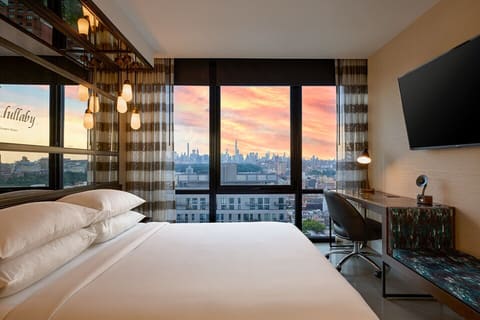
Renaissance New York Harlem Hotel
Check availability ›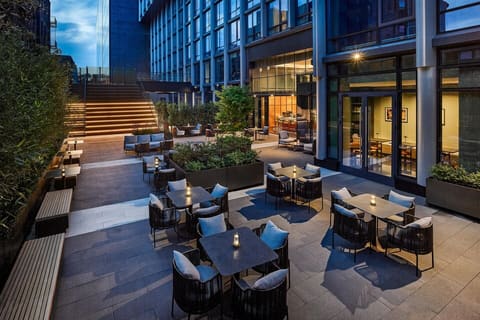
The George Manhattan, Tapestry Collection by Hilton
Check availability ›
Opera House Hotel
Check availability ›Hotel photos: Expedia Group. Ratings are shown as published there. Availability and conditions change; check the booking page. Affiliate links: we may earn a commission at no extra cost to you. All hotels by borough
Questions
What is Striver’s Row in Harlem?
It is the nickname of the St. Nicholas Historic District, a group of row houses on West 138th and 139th Streets built in 1891–93. The nickname comes from the upwardly mobile “strivers” who lived there.
Who designed the St. Nicholas Historic District?
Three firms worked on it: James Brown Lord, Bruce Price with Clarence S. Luce, and Stanford White of McKim, Mead & White.
Where is Striver’s Row?
It is in Harlem, in Upper Manhattan, on both sides of West 138th and West 139th Streets between Adam Clayton Powell Jr. Boulevard (Seventh Avenue) and Frederick Douglass Boulevard (Eighth Avenue).
Can you go inside the houses or the alleys?
The buildings are residential, and the rear alleys are gated off. Enjoy the facades from the street and respect the residents.
Why did the houses stay empty for years?
The developer sold very few homes and the financing company foreclosed in 1895. It would not sell to Black buyers until 1919–20, even though Harlem was already being left by white New Yorkers.
Is Striver’s Row a protected landmark?
Yes. It is both a New York City historic district, designated in 1967, and a National Register of Historic Places district, listed in 1975.
Also nearby
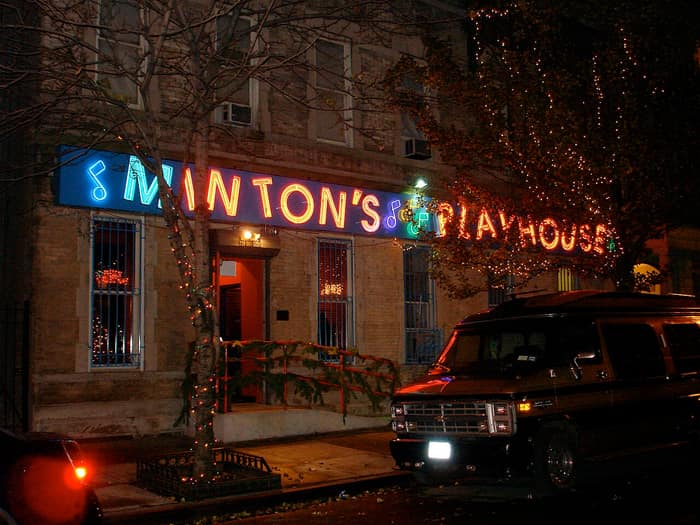
Minton’s Playhouse
Minton’s Playhouse · the Harlem club where bebop took shape
1.5 km away

Hispanic Society of America
Hispanic Society · Goya, Velázquez and Sorolla uptown
1.5 km away

Morris–Jumel Mansion
Morris–Jumel Mansion · Washington’s 1776 headquarters
2 km away

Lorelei Fountain
Lorelei Fountain · the marble monument no German city wanted
2 km away