
The New York Kouros, an Ancient Greek Grave Marker in Manhattan
The New York Kouros is an early life-sized Greek marble statue of a nude youth, carved in Attica around 590–580 BC. It is named after its present home, the Metropolitan Museum of Art on the Upper East Side of Manhattan. For anyone looking for a quiet, less obvious treasure inside one of the city’s best-known museums, it is a fine place to start.
Over 2,500 years ago this marble youth stood over the grave of a young Athenian aristocrat. Today it is a standing guest at the Metropolitan Museum of Art, and it shows how much Greek sculptors borrowed from Egypt.
The story of the New York Kouros
A kouros, plural kouroi, is the modern name for the free-standing statues of nude young men that the ancient Greeks began to make in the Archaic period. They are common in Attica and Boeotia. The New York Kouros is an early example of life-sized Greek statuary. It was carved in marble in Attica at a time when Greece was divided into many city-states, and the sources date it to about 590 to 580 BC.
The museum says that the statue marked the grave of a young Athenian aristocrat. In Athenian culture such monuments were especially popular for marking the graves of people who died young, although the statue did not necessarily show the person himself. Kouroi were also used as dedications to the gods, which is one reason why they are found in so many places.
In style the New York Kouros is similar to the nearly contemporary statue of Mentuemhat, and it is an example of the Daedalic style. The figure is stylized rather than realistic. It is highly geometric, and the body is idealized and abstracted, especially in the muscles and the joints. The eyes and face are not realistic either. The pose, with the arms straight at the sides, the body upright and facing forward, and the left foot placed in front of the right, was borrowed directly from Egyptian art.
Greek sculptors came to know Egyptian techniques through contact with Egypt, and Greek visitors who were impressed by the colossal Egyptian statues are said to have encouraged them to adopt the style. They changed it, however, by removing the stone that connected the legs and arms, and the vertical slab against which Egyptian statues were set. They also stripped the subject down to the nude, and they used the Egyptian grid system. Through the 6th century BC Greek artists made the human figure more and more natural. The New York Kouros stands between the old rigid forms and that later naturalism, and it takes its name from its location in New York.
Little-known facts about the New York Kouros
- The statue stands about 194.6 centimeters, or 76 5/8 inches, tall without its plinth, so it is almost exactly life-sized.
- The pose with the left foot forward and the arms at the sides comes directly from Egyptian art, and the statue is often compared with the statue of Mentuemhat.
- Although the figure is nude and idealized, it did not necessarily portray the dead young man himself.
- Greek sculptors removed from the Egyptian model the stone screens between the legs and arms and the vertical slab behind the figure.
- The head measures about 30.5 centimeters in height, and the shoulders about 51.6 centimeters in width.
- The kouros is named not for where it was found but for where it is now, the Metropolitan Museum of Art in New York City.
Tours near New York Kouros
Experiences in the area that you can book online with Viator:


Seeing the New York Kouros today
- The statue belongs to the Metropolitan Museum of Art, so you see it inside the museum, not outdoors. It is part of the collection of Greek and Roman art.
- Museum galleries are rearranged from time to time, so check the museum’s current information on opening hours, entry rules and whether the statue is on display before you go.
- Look closely at the stiff, geometric body and the left foot placed slightly forward, which are the details that show the Egyptian influence.
- The museum stands on the Upper East Side, near Central Park, so you can combine the visit with a walk in the park.
Opening hours, access and conditions can change. Check before you go.
Map: where New York Kouros is
Photos of New York Kouros


Where to stay near New York Kouros
Hotels close by, with ratings and current availability.

The Carlyle, A Rosewood Hotel
Check availability ›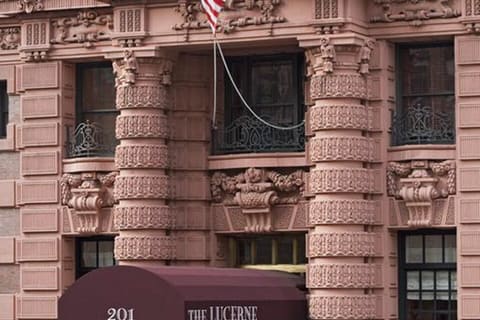
The Lucerne Hotel
Check availability ›
Hotel Beacon
Check availability ›Hotel photos: Expedia Group. Ratings are shown as published there. Availability and conditions change; check the booking page. Affiliate links: we may earn a commission at no extra cost to you. All hotels by borough
Questions
What is the New York Kouros?
It is an early life-sized Greek marble statue of a nude youth, carved in Attica around 590–580 BC. It is named after the Metropolitan Museum of Art in New York City, where it is kept.
Where can you see the New York Kouros?
At the Metropolitan Museum of Art on the Upper East Side of Manhattan. Check the museum for the current display and visiting rules.
What was the New York Kouros used for?
According to the museum it marked the grave of a young Athenian aristocrat. Kouroi were also used as dedications to the gods.
Why does the statue look Egyptian?
Its pose, with the arms at the sides, the left foot forward and the body facing front, was borrowed from Egyptian art, which Greek sculptors knew through contact with Egypt.
How tall is the New York Kouros?
It is about 194.6 centimeters, or 76 5/8 inches, without the plinth.
What is a kouros?
A kouros is a free-standing Ancient Greek statue of a nude young man, typical of the Archaic period. The plural is kouroi.
Also nearby
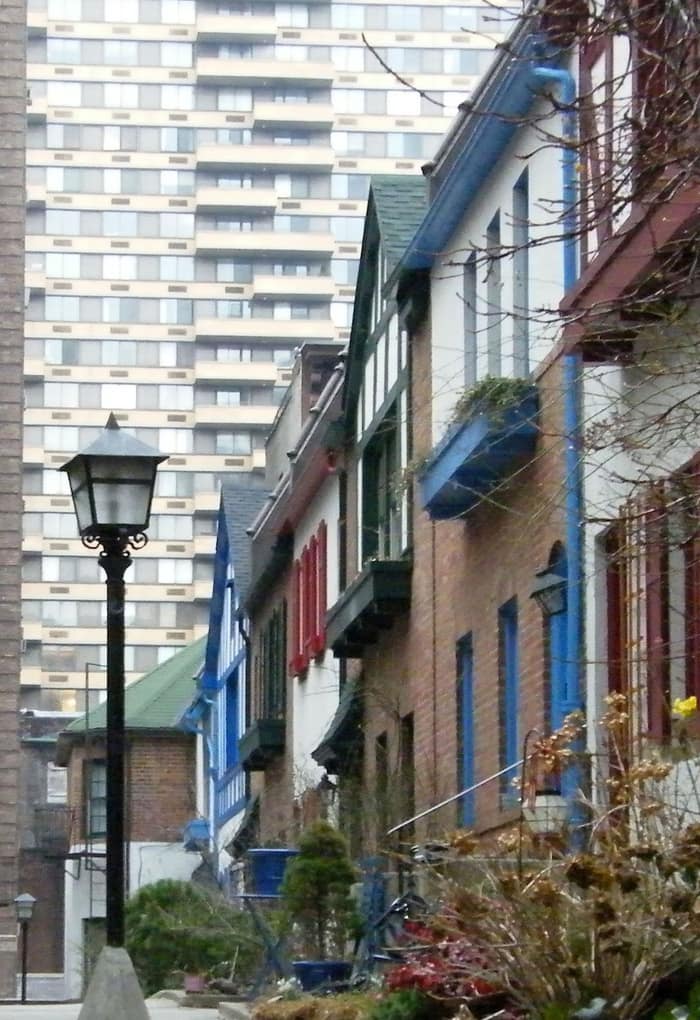
Pomander Walk
Pomander Walk · a storybook lane tucked into the Upper West Side
2 km away

The Octagon
The Octagon · last remnant of a historic asylum, on Roosevelt Island
2 km away

Blackwell Island Light
Blackwell Island Light · a Gothic stone beacon in the East River
2 km away

Mill Rock
Mill Rock · a tiny island joined by a huge blast
2 km away