
Dyckman House, the Oldest Farmhouse Left in Manhattan
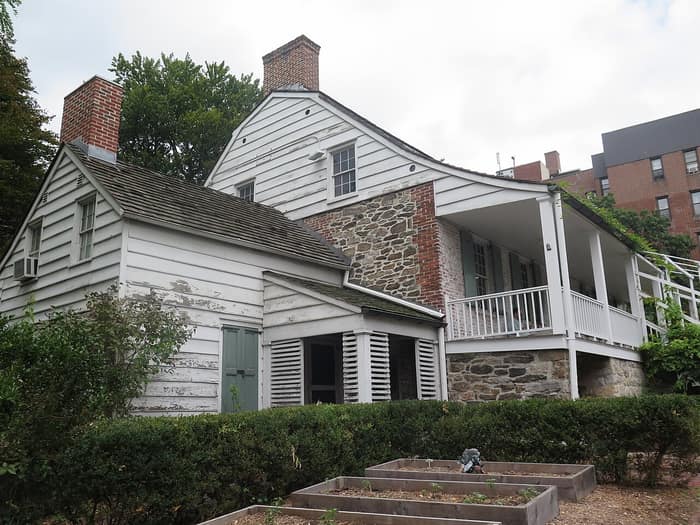
The Dyckman House, now the Dyckman Farmhouse Museum, stands at Broadway and 204th Street in Inwood, at the northern end of Manhattan. Built around 1783–1785, it is the oldest remaining farmhouse on the island and its only Dutch Colonial one, a quiet reminder of a time when the area was farmland. It is a National Historic Landmark and a charming hidden gem for visitors who want to go beyond Midtown.
Between modern apartment blocks in upper Manhattan sits a farmhouse built with bricks, nails and hinges salvaged from the huts of Hessian soldiers. A passerby in 1953 assumed it was an antique shop.
The history of the Dyckman House, from a family farm to a city museum
The Dyckmans were among the first settlers of what is now Inwood. Jan Dyckman came from Westphalia around 1660, and his grandson William Dyckman (1725–1787) built a family house on the Harlem River in 1748, on a farm of about 300 acres. In the American Revolution the Continental Army stayed on the family’s land from September to November 1776. The British later destroyed the second house, perhaps in retaliation, and British and Hessian troops built huts on the estate and occupied it until Evacuation Day in 1783.
William chose higher ground along the Albany Post Road, now Broadway, for a new home, and his eldest son Jacobus built the present farmhouse, using bricks, nails, hinges, locks and latches salvaged from Hessian huts nearby. Sources disagree on the date: 1783, 1784 and 1785 all appear. The house passed through the family for generations. Like many local farm families, the Dyckmans enslaved people in the early years; sources disagree on whether there were six or seven. The family held the house until 1868, when Isaac Dyckman died without sons and the estate was sold. The house was renovated around 1880 under later owners.
By the 1910s the subway had brought development to the area, and the house was in disrepair and in danger of demolition. In 1915 two of Isaac’s daughters, Mary Alice Dyckman Dean and Fannie Fredericka Dyckman Welch, agreed to give the house to the city and to restore it. Fannie’s husband, the architect Alexander M. Welch, supervised the work, which aimed at the house’s appearance before 1800. Reginald Pelham Bolton excavated parts of 45 Hessian huts on the old farm and reconstructed one in the yard. The sisters transferred the house to New York City on July 11, 1916, and it opened as a museum of Dutch and colonial life with the Dyckman family’s own furniture.
The house stayed little known even to its neighbors for decades. It became a New York City landmark in July 1967 and a National Historic Landmark that December. A major restoration closed it in 2003 and it reopened in 2005. Further renovations followed in 2015, when it reopened after six months, and a new project announced in late 2021 added accessibility features such as ramps and the restoration of a two-story annex demolished in the 1920s.
Little-known facts about the Dyckman House
- The house was built with bricks, bolts, nails, hinges, locks and latches salvaged from the huts of Hessian soldiers who had occupied the land.
- Carved into the granite outcropping beneath the basement stairway is a game board for nine men’s morris, a colonial American board game.
- A preserved Hessian hut stands behind the house, about 10 feet tall and 12 feet long, with a low door, small windows and a chimney.
- The porches look typical of the Dutch Colonial style but were added in 1825.
- In the 1950s a passerby told a reporter he had assumed the house was an antique shop.
- The farm once held a family cemetery, which was moved in the early 20th century to make way for the subway line and later the 207th Street Yard.
Tours near Dyckman House
Experiences in the area that you can book online with Viator:

Lower Manhattan Tour: The Remnants of Dutch New Amsterdam!
See details ›
New York City: Mafia History in Little Italy Walking Tour w/NYPD
See details ›
Lower East Side Food Tour: Iconic Eats & NYC History Walking Tour
See details ›
#1 Rated NYC Chinatown Food and History Walking Tour with FNYT
See details ›Visiting the Dyckman Farmhouse Museum in Inwood
- The house sits on a small hillock about 15 feet above Broadway, surrounded by a fieldstone wall and a garden with boxwood hedges and a beech tree. Check the current opening hours and any renovation closures before you go.
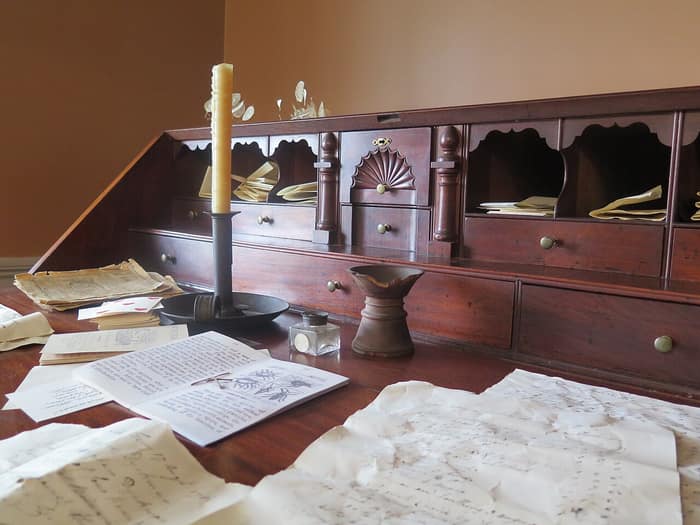
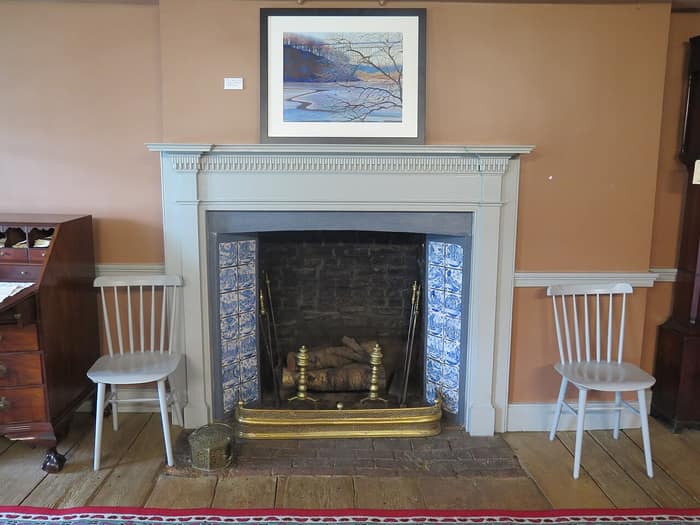
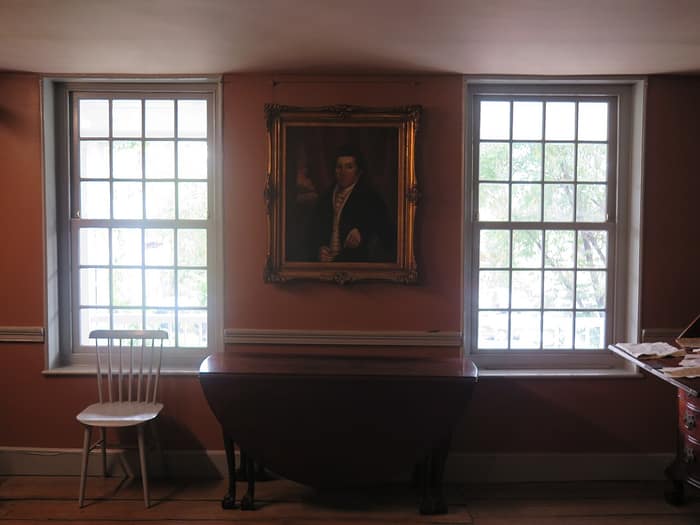
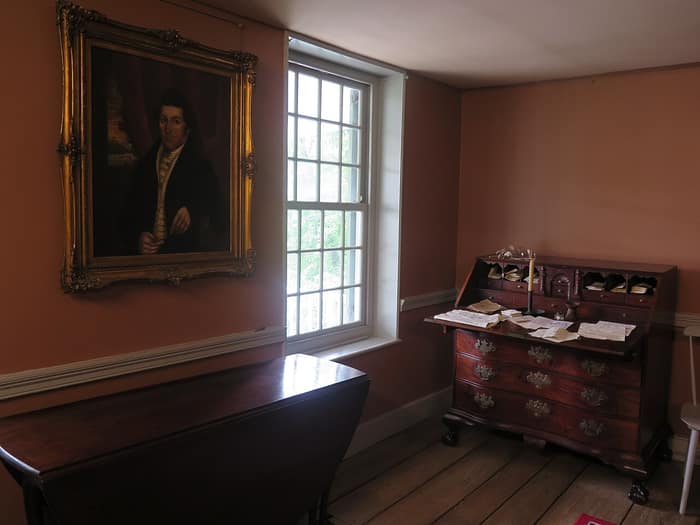
- Inside are 14 rooms, including a winter kitchen in the basement, a parlor, a dining room and William Dyckman’s office, furnished with objects from the Dyckman family and the period.
- The grounds hold the preserved Hessian hut, a well and a reconstructed smokehouse.
- A renovation announced in late 2021 was meant to improve wheelchair access, so confirm accessibility and the entrance in advance.
- Isham Park is two blocks away, and Edgar Allan Poe Cottage and High Bridge are a short trip from here.
Opening hours, access and conditions can change. Check before you go.
Map: where Dyckman House is
Photos of Dyckman House
Where to stay near Dyckman House
Hotels close by, with ratings and current availability.
Highbridge Hotel
Check availability ›
Melrose Hotel
Check availability ›
Opera House Hotel
Check availability ›Hotel photos: Expedia Group. Ratings are shown as published there. Availability and conditions change; check the booking page. Affiliate links: we may earn a commission at no extra cost to you. All hotels by borough
Questions
What is the Dyckman House?
It is a Dutch Colonial farmhouse museum at Broadway and 204th Street in Inwood, Manhattan. Built around 1783–1785, it is the oldest remaining farmhouse on the island.
How old is the Dyckman House?
It dates from the 1780s, but sources differ: 1783, 1784 and 1785 all appear. It was built after the British destroyed an earlier family house during the Revolutionary War.
Why is the Dyckman House special?
It is the oldest remaining farmhouse in Manhattan and the only one in the Dutch Colonial style. It is also a National Historic Landmark and a New York City landmark.
Where is the Dyckman House?
It is at 4881 Broadway, at the corner of 204th Street, in the Inwood neighborhood at the northern end of Manhattan.
What is the Hessian hut at the Dyckman House?
Hessian soldiers occupied the land during the Revolutionary War and built huts. Archaeologists excavated parts of 45 huts, and a reconstructed one stands behind the house.
Can I visit the Dyckman House?
Yes, it operates as a museum. Opening hours and access can change, so check the current schedule and any renovation notices before you go.
Also nearby

Hall of Fame for Great Americans
Hall of Fame for Great Americans · a colonnade of bronze busts
1.5 km away

Paradise Theater
Paradise Theater · a Baroque 1929 movie palace in the Bronx
2 km away

Edgar Allan Poe Cottage
Poe Cottage · where Poe wrote “Annabel Lee” in the Bronx
2.5 km away

Jeffrey’s Hook Light (Little Red Lighthouse)
Little Red Lighthouse · Hudson River beacon under the bridge
3 km away