
Bartow-Pell Mansion, the Last Manor House of Pelham Bay Park
The Bartow-Pell Mansion is a historic house museum tucked into the wooded northern part of Pelham Bay Park, in the Bronx. Built in the mid-19th century with a Greek Revival facade, it stands on land the Pell family acquired in 1654 and is surrounded by terraced gardens, a carriage house and a small family burial plot. It is a calm, off-the-beaten-path detour for anyone looking for hidden gems in the Bronx.
In the summer of 1936 the mayor of New York ran the city from this quiet house at the edge of Long Island Sound. Today it is the last manor house left in Pelham Bay Park, and one of the least-known historic homes in the Bronx.
The history of the Bartow-Pell Mansion, from the Pell purchase to a city museum
The story begins in 1654, when the English colonist Thomas Pell bought a vast tract of land from the Siwanoy, the Native American people of the area. By tradition the treaty was signed beneath an oak that stood just south of today’s house. Pell’s property became known as Pelham Manor in 1666, and his family built a first residence near the water around 1675. It burned during the American Revolutionary War. A second house, lived in by John Bartow and his wife and cousin Ann Pell Bartow, went up around 1790 and was probably demolished after the estate was sold in 1813 to the merchant Herman Leroy.
The mansion visitors see today is the third house on the estate. Robert Bartow, a relative of the Pell family, bought about 30 acres of the old property in 1836 and built it with his wife, Maria Lorillard Bartow. The architect is unknown and the exact date of construction is uncertain, but the house and an adjacent carriage building were finished by 1842. Robert, Maria and their seven children lived here. After Robert died in 1868 the house passed to his widow and then to his sons, and the Bartows were still in residence in the early 1880s.
In 1888 New York City bought the house when it created Pelham Bay Park, part of a push to build a system of parks in the Bronx. The land was then still part of Westchester County. The mansion stood empty for more than two decades, grew badly neglected and was used for a short time by a children’s home. Its revival began in 1914, when the International Garden Club, founded the year before by Zelia Hoffman and Alice Martineau, leased it. The architects Delano and Aldrich restored the house, formal gardens were laid out between 1914 and 1917, and the club opened its new headquarters on May 1, 1915.
The most unusual chapter came in 1936, when Mayor Fiorello La Guardia moved into the mansion for the city’s first “Summer City Hall”. A temporary communications line and a teleprinter linked him to Manhattan, motorcycle police rode back and forth, and an old road sign was even changed to point visitors here. He stayed from early July to early September.
After World War II the club turned the house into a museum, which opened in May 1946 with help from the city’s major museums. In 1959 it was renamed the Bartow-Pell Mansion to honor the two families. The carriage house was restored between 1987 and 1993 and is now used for exhibitions and education. The mansion’s facade, interior and grounds are a New York City landmark and a National Historic Landmark, and since 2008 the former garden club has been known as the Bartow-Pell Conservancy.
Little-known facts about the Bartow-Pell Mansion
- It is the last surviving manor house in the Pelham Bay Park area; the other mansions nearby were gradually destroyed.
- Among the furnishings are a desk that belonged to Aaron Burr and a bed by the cabinetmaker Charles-Honoré Lannuier.
- The first floor is arranged around a square central hall with an elliptical staircase, and the cellar was used for storing wine.
- About 100 yards south of the house is a small Pell family burial plot with headstones dating from 1748 to 1790, surrounded by four granite posts carved with pelicans, the symbol on the Pell coat of arms.
- The Treaty Oak, under which the 1654 land purchase was signed, was destroyed in 1906 and replanted in 1915.
- When Mayor La Guardia worked here in 1936, officials replaced a 135-year-old road sign reading “10 Miles to City Hall” so that it pointed to the mansion instead.
Tours near Bartow-Pell Mansion
Experiences in the area that you can book online with Viator:


Visiting the Bartow-Pell Mansion and its gardens
- The house is a museum on Shore Road in northern Pelham Bay Park. It is reached by a driveway of about 200 yards through woods, with a parking lot at the end. Opening days have been limited in the past, so check the current opening hours and visiting rules before you go.
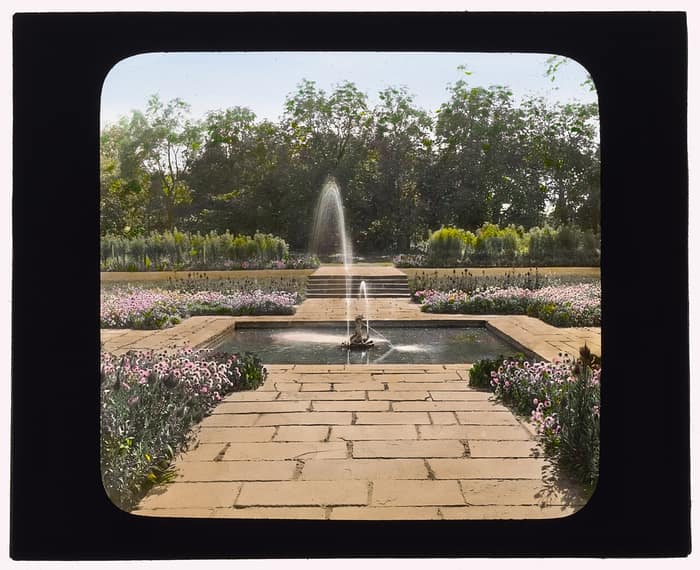
- The formal terraced garden, with a sunken fountain, stone walls and the Mary Ludington Herb Garden beside it, slopes toward the lagoon and Long Island Sound. Long Island Sound itself is no longer visible from the house.
- The carriage house is used for exhibitions and educational programs, and a path called the Siwanoy Trail loops around the estate.
- The nearest subway station is Pelham Bay Park, across the Hutchinson River from the estate, and a Bee-Line bus route also stops outside the grounds. Orchard Beach lies across the lagoon.
- Pelham Bay Park is large and the setting is rural rather than urban, so plan the trip from Manhattan as a half-day outing rather than a quick stop.
Opening hours, access and conditions can change. Check before you go.
Map: where Bartow-Pell Mansion is
Photos of Bartow-Pell Mansion


Where to stay near Bartow-Pell Mansion
Hotels close by, with ratings and current availability.
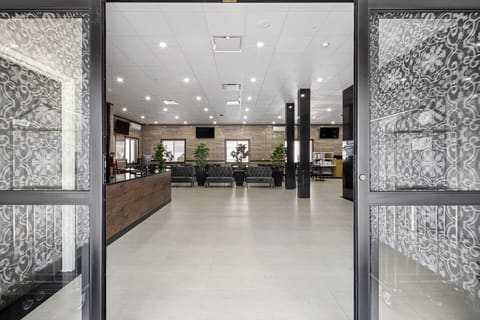
Highbridge Hotel
Check availability ›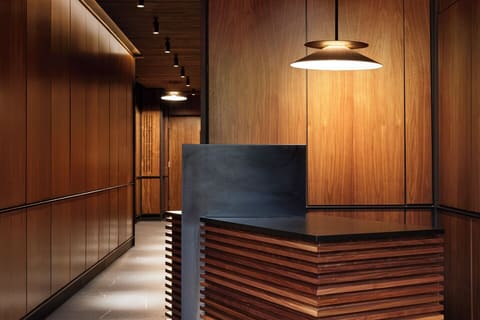
Melrose Hotel
Check availability ›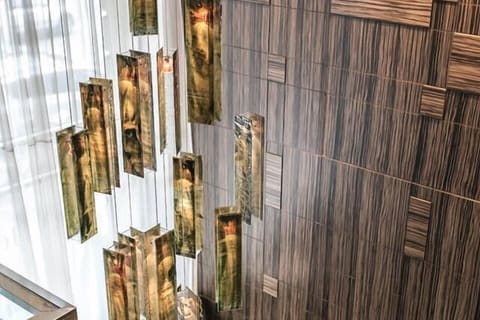
Opera House Hotel
Check availability ›Hotel photos: Expedia Group. Ratings are shown as published there. Availability and conditions change; check the booking page. Affiliate links: we may earn a commission at no extra cost to you. All hotels by borough
Questions
What is the Bartow-Pell Mansion?
It is a historic house museum in Pelham Bay Park, in the Bronx. Built in the mid-19th century, it is the last surviving manor house in the park and is both a New York City landmark and a National Historic Landmark.
Who built the Bartow-Pell Mansion?
Robert Bartow, a relative of the Pell family, built it with his wife, Maria Lorillard Bartow, after buying part of the old Pell estate in 1836. The architect is unknown, and the house was finished by 1842.
Why did Mayor La Guardia live at the Bartow-Pell Mansion?
In 1936 he used the house as the city’s first “Summer City Hall”, staying from early July to early September with a few aides. He used it as a summer base only that year.
Can you visit the Bartow-Pell Mansion?
Yes, it is a house museum and its gardens are part of the visit, but opening days have been limited. Check the current opening hours and rules before you travel.
How do I get to the Bartow-Pell Mansion?
The house stands at the end of a driveway off Shore Road in Pelham Bay Park. The nearest subway station is Pelham Bay Park, across the Hutchinson River, and a Bee-Line bus route stops outside the estate.
What is there to see around the Bartow-Pell Mansion?
The terraced gardens, the carriage house, the Pell family burial plot and the Siwanoy Trail are all on the grounds. Pelham Bay Park, the lagoon and Orchard Beach are close by.
Also nearby

Hart Island
Hart Island · New York City’s public cemetery off the Bronx
3.5 km away

Woodlawn Cemetery
Woodlawn Cemetery · 400 acres of mausoleums and famous graves
6 km away
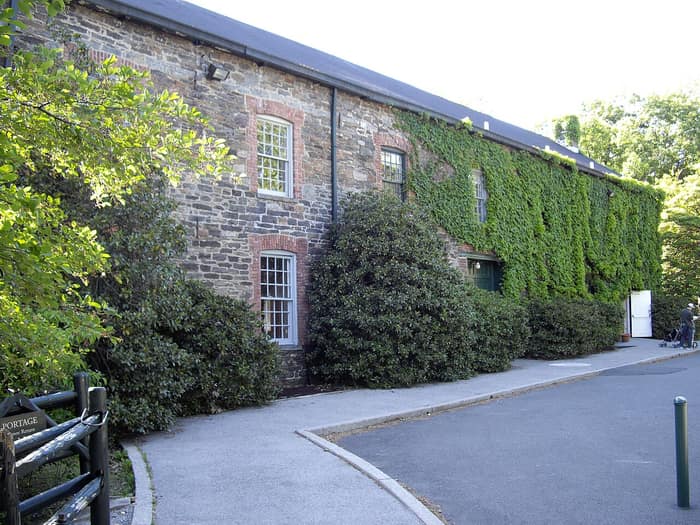
Lorillard Snuff Mill
Lorillard Snuff Mill · oldest tobacco factory building in the U.S.
6 km away

Fort Schuyler
Fort Schuyler · a brick coastal fort that became a college
7.5 km away